
Bench Warrants in Louisiana
Under Code of Criminal Procedure Article 333, a Louisiana court must issue arrest process once a defendant fails to appear in a covered criminal matter after proper notice. The two orders do different jobs. A bench warrant pulls a person back into a case that already exists. A new arrest warrant follows a probable-cause finding that an alleged offense occurred. The missed setting might sit in district court or a lower Louisiana court, such as a city traffic docket. After service, the officer brings the defendant before the issuing Louisiana court. Not every missed payment triggers a bench warrant. A city-court entry can also be absent from a parish sheriff's list. Confirm the notice, the order, the next setting, and any recall with the Louisiana court. Ask the serving agency only about its own service record.
Louisiana Bench Warrants After Notice
Article 333 also governs who gets told. Louisiana requires notice to the prosecutor, the defendant, and any personal surety by mail or electronic means. A bail agent or commercial surety must be notified electronically or by certified mail within 60 days. The Louisiana case record includes proof that notice went out. Send it late, and the surety's obligations are released. The rule turns on a properly noticed Louisiana court appearance. A missed calendar entry alone is not enough. Act 672 took effect August 1, 2026 and changed the service-address and notice provisions, so read the official Act 672 text alongside the current Article 333. Older descriptions may not match the Louisiana rules now in force.
- Failure to appear (FTA)
- Missing a required court appearance after proper notice.
- Bench warrant
- Arrest process issued by a Louisiana court in connection with a missed appearance or court directive.
- Personal surety
- A person who undertakes a bond obligation, distinct from a commercial surety or bail agent.
- Recall
- A Louisiana court's withdrawal of a Louisiana warrant it issued; verify that the executing agency received notice.
Note: The Louisiana notice rule covers specified criminal court appearances only, not every civil, family, traffic, or payment matter.
How a Louisiana Bench Warrant Is Issued
Once a properly noticed Louisiana failure to appear is on record, Article 333 directs the issuing court to act. It can issue the warrant on its own or on the prosecutor's motion. The Louisiana clerk then records the order and the proof of notice. A sheriff, a city police department, or a constable may be assigned to serve it. The case stays with the issuing court regardless. Louisiana's Article 205 keeps an arrest warrant in effect until it is executed or recalled. Time alone does not end it. The court file shows the order and the case setting; the executing agency keeps its own service or booking record. A public list is not the official record of Louisiana warrant issuance, recall, or transfer. A new-charge concern runs through a different probable-cause process than a bench warrant after a missed appearance. The Louisiana arrest-warrant rules explain that distinction and the required warrant fields.
Louisiana Bench Warrant: Court or Sheriff
Think of the two offices as holding different halves of the file. The Louisiana court keeps the case, the warrant, the notice, the next setting, and the recall entry. The sheriff or other agency only tracks whether its officers received or served the process. A sheriff's list is neither the full docket nor a statewide index.
| Louisiana Record Holder | What to Confirm | Limit |
|---|---|---|
| Issuing Louisiana court clerk | Case, warrant order, notice, recall, transfer, next setting | May not show the agency's latest service entry |
| Parish sheriff or executing agency | Its service, booking, or return-of-process record | May not control the Louisiana court's next date or recall decision |
| Louisiana public warrant list | Entries selected for that local public page | May omit lower-court or other-agency warrants and may lag |
| Louisiana records custodian | A specific existing record that may be disclosed | Not a live status check; exemptions may apply |
A Louisiana public-record request goes to the custodian of a specific record. It cannot replace a court status inquiry or verify an agency's service entry. R.S. 44:31 and R.S. 44:3 set the access limits.
Bench vs Arrest Warrant in Louisiana
Both Louisiana processes can end in custody. They simply begin differently. Article 333 covers a properly noticed failure to appear in an existing case. Article 202 starts from a complaint and a magistrate's probable-cause finding that an alleged offense occurred. The issuing court and the next step both depend on the order's basis.
| Point | Louisiana Bench Warrant | Louisiana Arrest Warrant |
|---|---|---|
| Basis | Properly noticed failure to appear in a covered matter | Magistrate finds probable cause on a complaint affidavit |
| Case link | Existing case with a missed required setting | Alleged offense named in the Louisiana warrant |
| Issuing process | Court acts on its own motion or prosecutor's motion | Qualified magistrate issues after reviewing the complaint |
| Next step | Ask the Louisiana court about status, recall, reset, and appearance | Confirm the issuing Louisiana court, service agency, and lawful response |
Confirm the Louisiana court's record and paperwork instead of guessing from a partial online row. Note: A city or JP clerk may be the only public point for its local case, so a parish sheriff's list can leave a real gap.
Louisiana Bench Warrants Do Not Expire
No Louisiana statute sets a general number of years after which a bench warrant expires. Louisiana's Article 205 says an arrest warrant remains in effect until executed or recalled. An old docket date proves nothing. Neither does a missing list entry. The issuing court controls the case and any recall, while the sheriff or other agency holds its own service record. A Louisiana court may have recalled or transferred an order while a public list sat stale. Removal from a list does not itself recall it. Ask the clerk for current status. Ask the executing agency whether its record reflects the court action. No public full-warrant search covers every parish in Louisiana. The duration rule comes from Article 205, and case-specific status comes from the Louisiana court.
How to Resolve a Louisiana Bench Warrant
Call the issuing Louisiana court first. Confirm whether its warrant is active, recalled, or transferred. Ask what appearance or motion is required, whether bond is set, and which office handles surrender or booking. Counsel can request a recall, a reset, or a controlled appearance; Louisiana has no statewide recall form, surrender hotline, or universal payment path.
- Have the notice, case number, full name, birth date, and parish or city ready.
- Ask the Louisiana clerk for status, the next step, and whether a motion or attorney appearance is needed.
- Confirm bond and accepted payment directly with the court or jail before sending money or travelling.
- Follow the Louisiana court's surrender instructions and keep written proof of its action.
Caution: A Louisiana bench warrant remains in effect until executed or recalled. Elapsed time, payment, or removal from a public list does not confirm that the Louisiana court withdrew it.
Posting bond settles nothing by itself. It neither decides the charge nor excuses a later court date. In Louisiana, court costs, bond, and any OMV reinstatement fee are separate items, so ask the clerk for an itemized balance and written proof of recall or satisfaction.
Louisiana Bench Warrant Recall in 2026
Act 114 took effect August 1, 2026. It reshaped Louisiana recall rules. The new Article 202(H) lets a magistrate recall that magistrate's own arrest warrant, with written notice going to the district attorney and executing agency immediately. Article 205 was amended too. A warrant now stands until executed or recalled. Neither change guarantees an instant Louisiana system update.
The sequence is recall order → written notice → court and agency record checks. Keep the order or receipt, then ask the Louisiana court clerk and Louisiana serving agency whether their own records reflect it. Louisiana's restricted justice-information exchange is not public, and the law sets no cross-system posting time.
Entries sometimes disagree. Ask the Louisiana court which order controls the case, and ask the serving agency what document it needs to correct its record.
Which Louisiana Court Issued It
Every Louisiana court keeps its own docket. District courts carry the felony docket. City courts hear misdemeanor, traffic, and ordinance cases. Parish and Justice of the Peace courts hold narrower statutory roles, and mayor's, juvenile, and family courts each keep their own records. Orleans criminal district cases run through a separate Clerk of Criminal District Court. So start with the Louisiana court named on the citation, summons, or notice. Need to find the official first? The Attorney General's JP and constable directory locates an official, not a warrant. The Louisiana parish and city directory then gets you to that court or its serving agency. For one local example, the Baton Rouge City Court official FAQ sends bench-warrant questions to Criminal/Traffic staff, who can confirm whether a Louisiana warrant is active, recallable, or transferred. Follow the named court's directions.
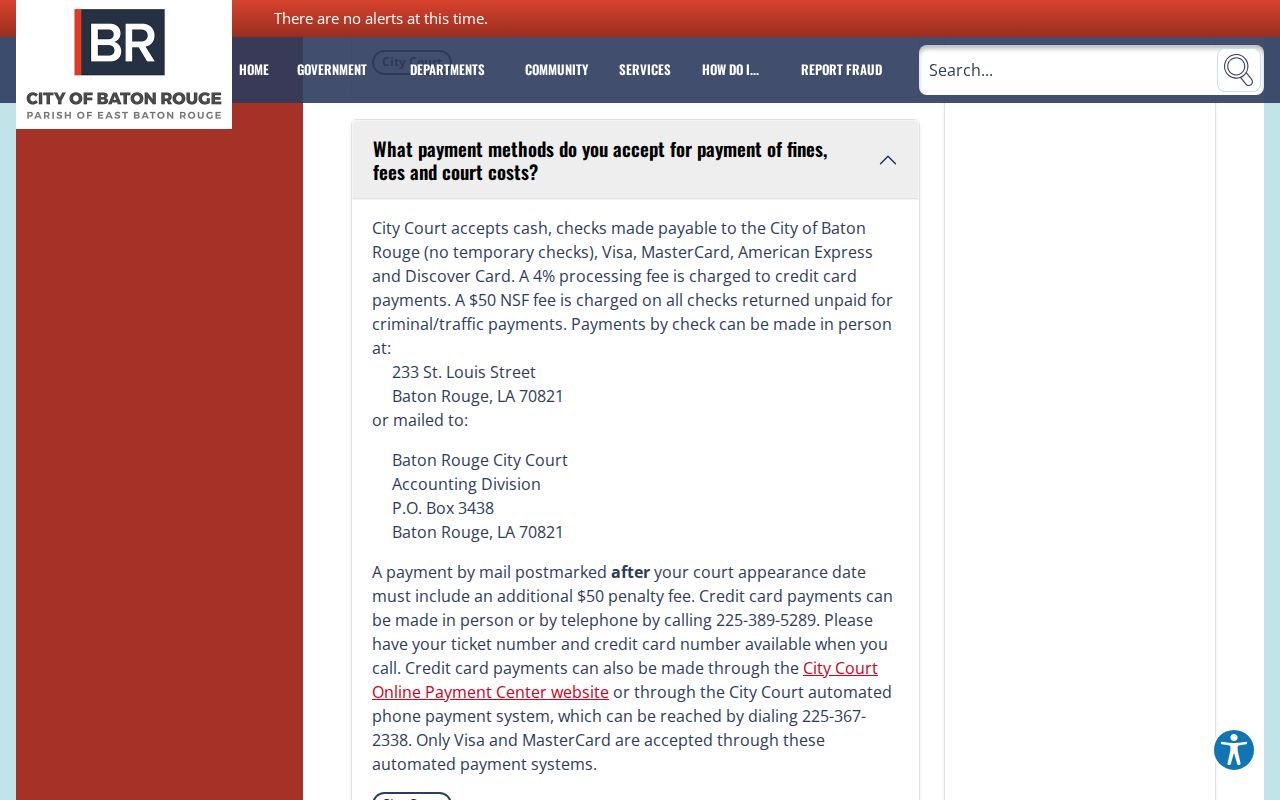
Other Louisiana courts may take a different route than this published one.
Louisiana Lower-Court Bench Warrants
A Louisiana city or JP bench warrant can sit in the lower court's file and never reach a parish sheriff list. That surprises people. City process may go to a marshal, constable, or police agency. JP process goes to that court's constable. The Louisiana AG directory's “Arrest Warrant Certified” filter describes an official's training, not a person's warrant. A clean sheriff search covers one office only. Start with the Louisiana court on your notice. Ask which agency serves its warrants. Sometimes no public page answers. Then request a specific docket entry or order from that office. An investigation, a juvenile rule, or a sealing order can limit access. A records request is still not live confirmation. For your own case or a family member's, the issuing Louisiana court gives recall, reset, payment, and next-date instructions, and the Louisiana parish and city directory routes you there. Note: The Attorney General directory helps identify a JP office, but its certification filter is not a warrant-status search.