
How to Search for a Louisiana Warrant
Louisiana has no portal covering every parish and city. Start a Louisiana warrant search at the court named on the citation, bond paper, or notice. Gather the parish or city, case number, full legal name, and date of birth. City and Justice of the Peace courts keep their own Louisiana dockets, which the district clerk may not hold. Ask whether the order is active, recalled, or transferred. Ask what appearance is next. The issuing Louisiana court keeps the warrant and its case status, while the sheriff, police, constable, or marshal assigned to serve it keeps a separate execution record. A Louisiana sheriff list can help. Its scope and timing belong to that office. A missing entry does not prove a Louisiana court has no active warrant.
- Read the Louisiana paperwork for the parish, city, and court that issued it. Start with a named lower court if the citation is from a city.
- Contact the issuing Louisiana clerk or court division. Ask for status, recall or transfer, and the next appearance.
- Check the parish sheriff's Louisiana list if offered, then confirm a possible match with the serving agency.
- Use the Attorney General's JP directory to locate a Louisiana court and constable. It lists officials, not warrants.
- Use the Louisiana parish directory to find the local office. Before travelling or paying, ask the court about recall, counsel, surrender, or bond.
A Louisiana public-records request has limits. It can seek an existing order or docket entry from the office that holds it, but that is not real-time status confirmation. Check OMV for a traffic-license flag. Use PACER only for a federal docket.
Louisiana Has No Public Warrant Portal
No Louisiana State Police public search covers all active warrants. Its BCII-LCJIS information describes Louisiana's fingerprint-based criminal-history repository and the restricted LLETS exchange. R.S. 15:587 limits public access to that repository. The FBI's NCIC serves authorized users only. Neither works as a public Louisiana warrant query. DPS&C's Most Wanted and Warrant Cases page covers selected Louisiana probation and parole matters. It offers no parish selector or agency filter, claims no full coverage, and states no update interval. It may point to a program office. Still, it cannot confirm a separate Louisiana city or parish court order. Louisiana has restricted justice networks, yet no public all-parish warrant search or coverage map.
Louisiana Warrant Search Fields
No Louisiana public statewide form exposes warrant-search fields. LLETS and NCIC stay restricted. LACCH holds criminal history, not live Louisiana warrant status. DPS&C's selected cases, an Attorney General directory, sheriff lists, and OMV status each answer a narrower question. These are the public fields a Louisiana visitor can see, not internal system controls. One caution applies: the AG directory's “Arrest Warrant Certified” filter means a Justice of the Peace meets a training rule. It does not search for a person's Louisiana warrant.
| Field Label | Type | Required | Notes |
|---|---|---|---|
| Louisiana LLETS / NCIC | No public fields | No public form | Restricted justice-user inquiries only |
| Louisiana LACCH | No public warrant fields | No public form | Fingerprint history, not live status |
| Louisiana DPS&C Warrant Cases | No parish or warrant filter observed | No public search form | Selected probation/parole cases only |
| Louisiana AG JP directory | Title, Parish, Arrest Warrant Certified | Search button shown | Finds officials and courts, not warrants |
| Parish sheriff list | Varies by parish; Caddo uses A–Z last-name links | Local only | Read the Louisiana page's scope and contact its custodian |
Louisiana's JP Directory Finds Courts
The Louisiana Attorney General's Justice of the Peace and Constable Directory filters by title, parish, and arrest-warrant certification. Columns list the official, position, jurisdiction, phone, and training status. Those entries do not return a pending Louisiana warrant, case, or arrest result. A Louisiana JP court docket may sit apart from the district clerk, and a constable's service record may sit apart from the parish sheriff site. The directory locates the office. Contact the JP court about its order. Ask the constable about execution. The official Louisiana directory offers those title, parish, and certification filters.
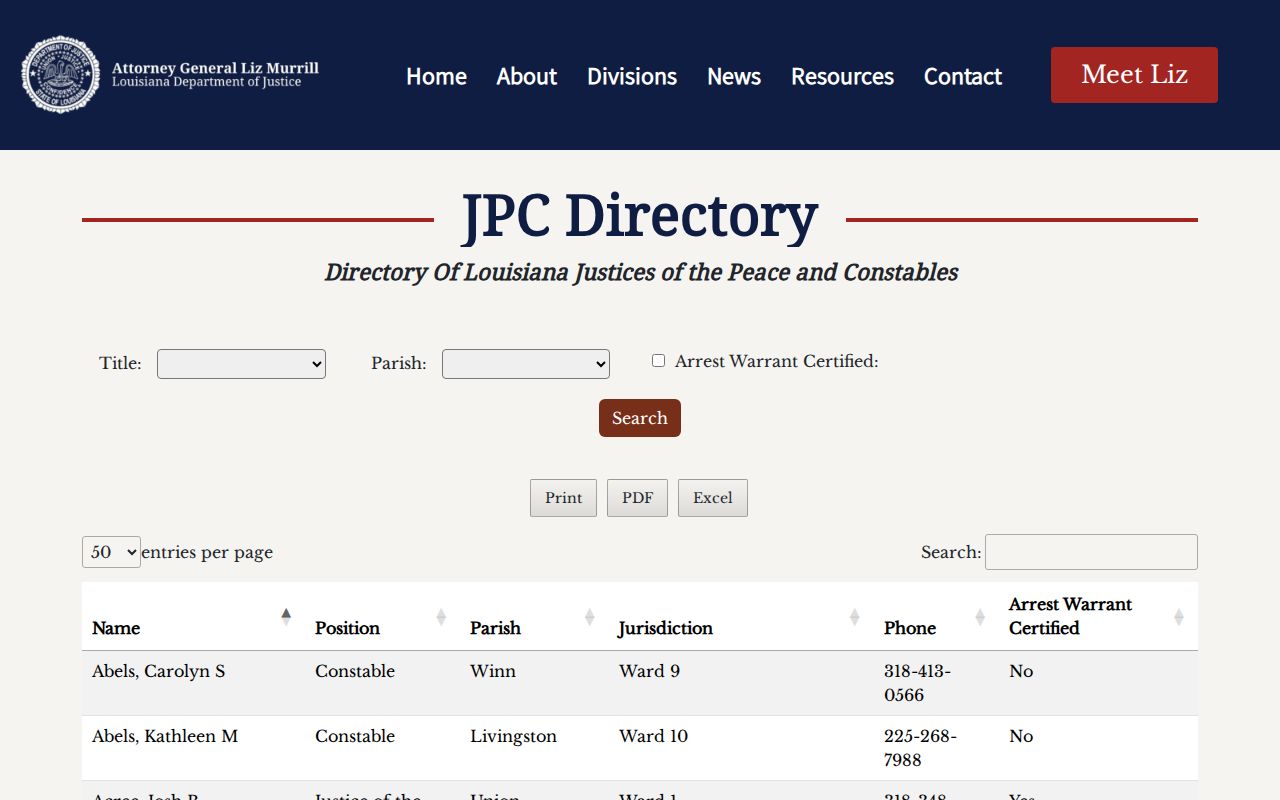
Certification means a Louisiana Justice of the Peace has met the training rule for issuing arrest warrants. It says nothing about any person's case.
What a Louisiana Warrant Search Returns
Louisiana shares no standard public warrant-result row. Under Article 203, a written Louisiana arrest warrant states its date and its municipality or parish. It names or reasonably describes the person and states the charged offense. It commands arrest and booking. It bears the magistrate's signature and title. In a noncapital case, bail may appear when the magistrate can set it. A Louisiana public list may show less. Caddo's sheriff table lists identity and date but omits issuing court, offense, bond, and case number. A name-only match still needs confirmation from the Louisiana court and the serving agency.
| Louisiana case / warrant ID | Ask the issuing court for its case identifier; a local public list may omit it. |
|---|---|
| Louisiana name field | The court order names or describes the person; a list may show only identity columns. |
| Louisiana charge | Article 203 requires the offense on the written warrant; a public row may omit it. |
| Louisiana issuing court | The order states municipality or parish; that court holds the case. |
| Louisiana bail | The warrant may state bail when the magistrate has authority; a blank row proves little. |
| Louisiana status / return | Ask the court about recall or transfer and the agency about service or booking. |
Louisiana Local Lists Can Be Partial
A Louisiana sheriff list covers only what that office publishes. Caddo's official list says it omits fugitives from other agencies in the parish. Its A–Z page shows names and dates. It leaves out warrant type, issuing court, offense, bond, and case number. Other Louisiana parish and city sites differ in coverage, and some post no public list at all. Baton Rouge City Court posts its Louisiana warrant list daily. Court-processed data can still take 7–10 days to appear. The linked Warrant Lookup has returned a 404, and an older open-data route redirects to a login. That note does not prove a working or complete search. For a personal status, ask the court. The City-Parish's official Court & Legal Services page states the posting interval and the processing lag.
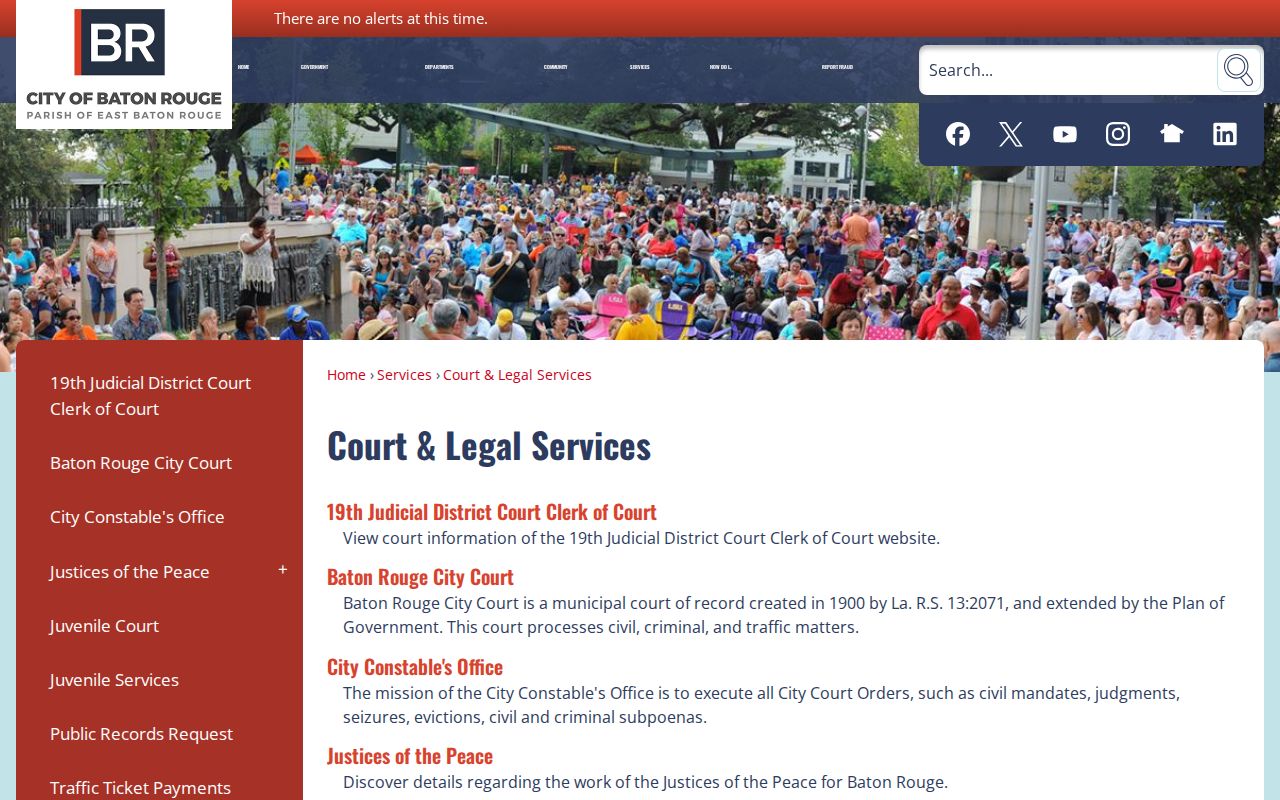
A Louisiana court can confirm whether a case is active, recalled, or transferred.
Where Louisiana Warrants Are Checked
Louisiana warrant records live in more than one drawer. The issuing court holds the order itself, along with the docket, any recall, and the next court date. The parish sheriff, or whatever agency the papers name, tracks service, the return, and booking. Lower-court process often sits somewhere else entirely. A city court, a justice of the peace court, a constable, or a marshal may carry a Louisiana municipal warrant that no parish sheriff list shows. The State Police reach LLETS and NCIC, but that access is restricted, and no public index ties every Louisiana source together. So follow the court and the serving agency named on the papers. If the local route is unclear, the Louisiana parish directory can point you to the right office. One more wrinkle: in Orleans criminal district cases, the Clerk of Criminal District Court is separate from the ordinary parish Clerk of Court. And a city citation belongs with that city's own court, not with the district clerk by assumption.
Louisiana OMV Status Is a Separate Check
A Louisiana traffic case can reach your license even before any warrant question is settled. Under R.S. 32:57.1, a court can notify DPS&C when someone released on a written promise fails to appear. That notice starts a clock. The person has 180 days to comply before suspension may follow, unless the charge is disposed of first. Keep in mind what the result tells you. An OMV record reports a Louisiana driving-privilege issue, not whether a court warrant exists or was recalled. Resolve the citation with its own court, then submit whatever proof OMV requires. The OMV suspension page lists the accepted proof and the reinstatement categories, but check license status through the status form rather than assuming the affidavit alone covers it. Court case and driver-license flag sit with separate custodians, so check each one where it lives. The official Louisiana OMV instructions show the written-promise affidavit and the accepted proof routes.
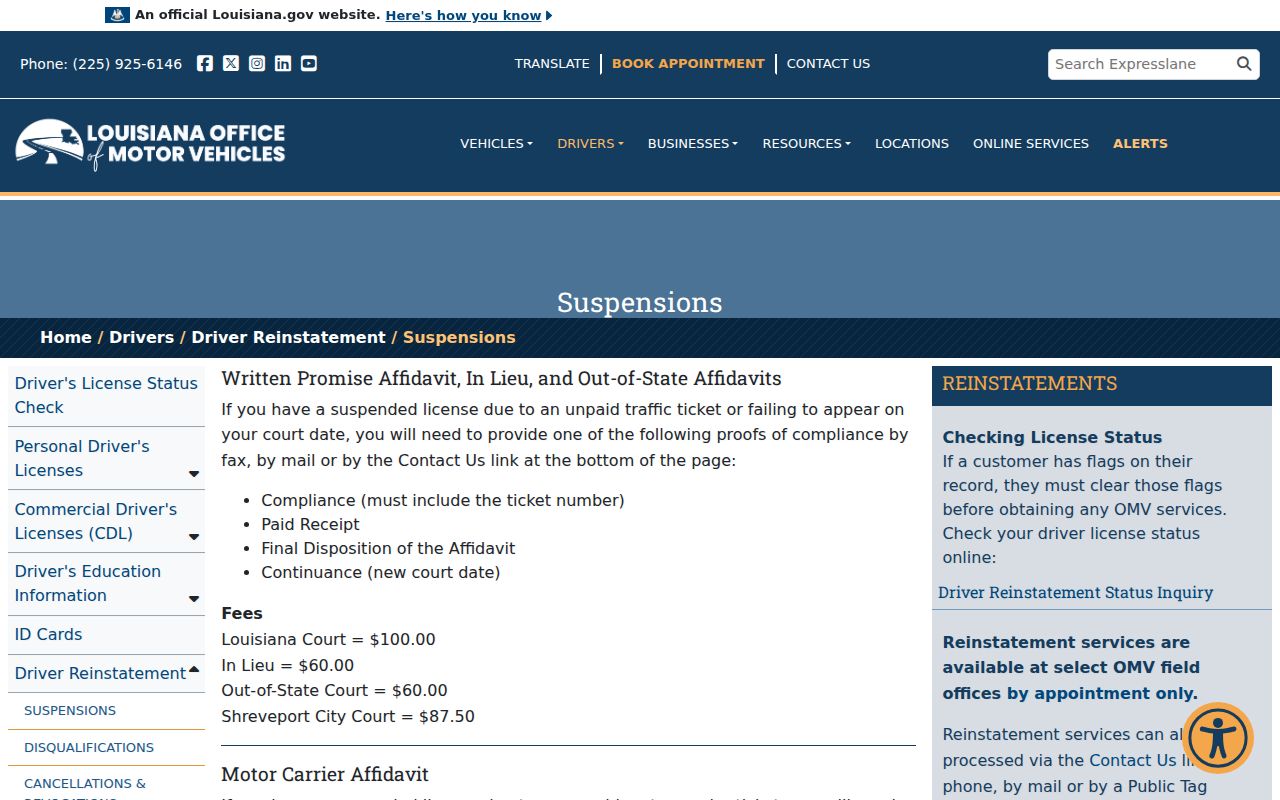
The Louisiana OMV forms address license compliance, not warrant status or the court record.
Access and Restricted Warrants in Louisiana
Louisiana's Public Records Law generally lets any adult inspect or copy public records from the custodian. R.S. 44:3 carves out exceptions for criminal investigations and pending litigation, and it names some initial records that stay public. The law cuts both ways, though. It does not open every Louisiana warrant or court docket, and it does not seal every record either. Juvenile files follow a different set of rules entirely. Children's Code Article 412 gives Louisiana juvenile matters their own confidentiality scheme, and an expungement or sealing order can also restrict access. LLETS is worth distinguishing here too: LACCH is a closed criminal-history repository, separate from a request for a Louisiana court order or a sheriff's service record. When a specific item is withheld, ask the custodian to state the legal basis.
Key Rules:
R.S. 44:3 identifies criminal-investigation and pending-litigation exceptions and some public initial records.
Children's Code Article 412 protects juvenile records subject to listed exceptions.
No public Louisiana warrant search exists; a restricted or absent result cannot confirm whether a court issued an order.
Louisiana Records Requests Need a Custodian
A Louisiana public-record request asks an office for a record it already holds. R.S. 44:31 gives you the right to inspect and copy, and R.S. 44:32 bars a fee for simply looking. Copies can carry charges, and those vary. When you write, request something concrete: a Louisiana warrant order, a recall notice, a docket entry, or a service return. Address the clerk, sheriff, police agency, or constable that keeps the file. Access has limits, though. R.S. 44:3, juvenile law, or a sealing order can close a record. Caddo's local request form asks you to name a custodian and describe the record, but its fields are not a statewide standard. The Caddo Sheriff's public-record request page lays out the form fields and links its PDF.
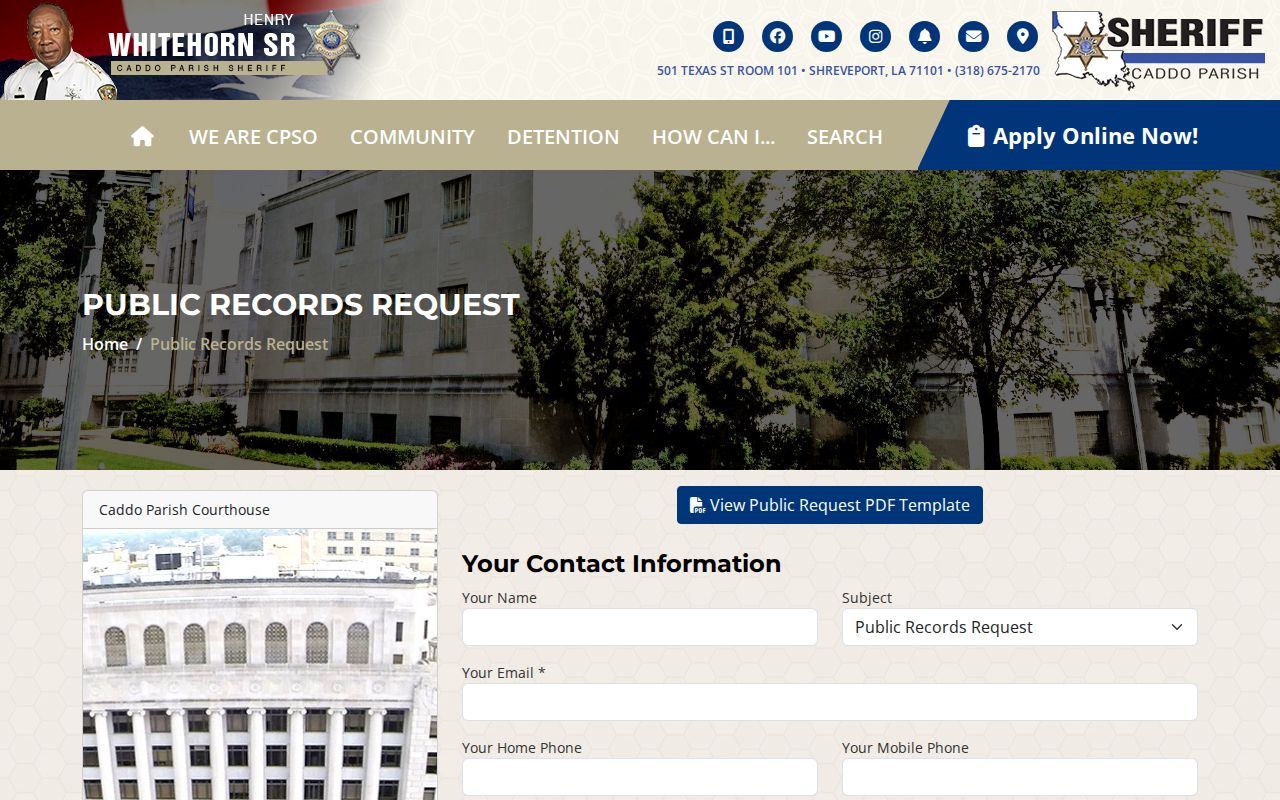
Use the Louisiana custodian tied to the case. The Caddo form only fits records that office keeps.
Louisiana Warrants and Federal Dockets Differ
PACER covers public federal docket material for Louisiana's Eastern, Middle, and Western Districts. It does not search state, city, or parish warrants. Sealed or unfiled warrant material may not show up either. A federal docket, in short, is not a Louisiana warrant-status service. If a federal case is what you have, call the district clerk or your counsel and use PACER for the filings you can reach. U.S. Marshals serve federal process, but their offices do not run public warrant desks for Louisiana. For a parish or city order, go straight to that Louisiana court and the agency executing the warrant. Note: federal docket access and a Louisiana parish warrant check answer separate questions, even when one event touches both courts.