
The Louisiana Warrant System
Louisiana offers no public statewide active-warrant search. Instead, warrant records live in separate court, law-enforcement, criminal-history, and federal systems, each with its own access rules. Under Code of Criminal Procedure Article 202, a Louisiana court issues an arrest warrant once probable cause supports a reasonable belief that a person committed an offense. The clerk of the issuing Louisiana court keeps the case record. The agency named in the order tracks service or booking. That agency is often a parish sheriff, but municipal police, constables, or court marshals may handle a particular warrant. Louisiana State Police supports authorized information exchanges rather than a public warrant roster. A clean result on one program or local list does not settle another court's file. So start with the issuing parish or city court and the agency responsible for service. The Louisiana parish directory routes you to local pages, and the issuing court stays authoritative on its docket and any recall.
Louisiana State Police Warrant Role
Louisiana State Police sits within the Department of Public Safety and Corrections and maintains the state's justice-information infrastructure. Its Bureau of Criminal Identification and Information, working through the Louisiana Criminal Justice Information Services unit (BCII-LCJIS), supports Louisiana criminal-history records and authorized exchanges over the Louisiana Law Enforcement Telecommunications System (LLETS) and national systems. Those tools serve approved justice users only. LSP offers no public Louisiana active-warrant search and no parish-by-parish coverage list. The LSP BCII-LCJIS program page describes that role and its access limits.
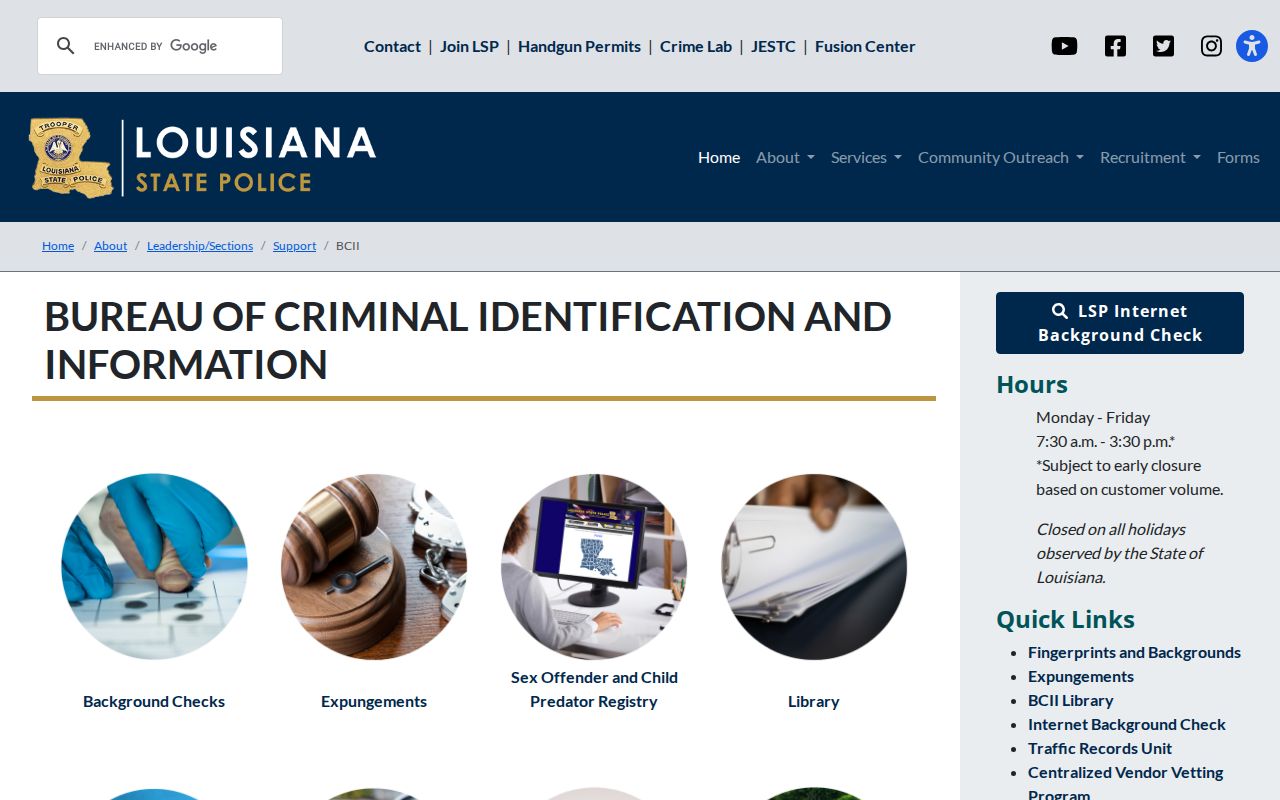
That official page lays out Louisiana program information and access rules. It carries no warrant entries, and LSP's network contacts serve authorized users rather than public warrant confirmation.
Statewide Warrant Databases
Louisiana's justice-information tools do not combine into one public warrant lookup. LLETS lets authorized users exchange law-enforcement information and check eligible wanted-person entries. NCIC is national and restricted. LACCH holds fingerprint-based criminal-history information. DPS&C's Warrant Cases page publishes selected probation and parole cases. Each Louisiana resource has a distinct purpose, and none of them searches every court warrant.
| System | What It Indexes | Run By |
|---|---|---|
| LLETS / NCIC access | Authorized justice-system exchange; not public and no full public coverage map | LSP BCII-LCJIS / participating agencies; FBI |
| LACCH | Fingerprint-based arrest and disposition history; not active-warrant status | LSP BCII-LCJIS |
| DPS&C Warrant Cases | Selected probation/parole fugitive cases; no all-court coverage claim | DPS&C Probation and Parole |
| ICJIS exchange | Secure court and justice-data sharing; not an open warrant index | Louisiana judiciary and participating justice partners |
Each Louisiana tool serves a different custodial need; none gives a complete current-warrant answer.
Louisiana's Public Warrant Search Gap
No portal queries every Louisiana parish's active warrants. There is no public coverage selector, coverage map, warrant total, or freshness label. LLETS and NCIC stay restricted to authorized users, and DPS&C's selected Louisiana cases do not represent every court or agency. Louisiana courts can also keep electronic records without public access. A Louisiana docket may show filings but not live service. A parish sheriff's page may omit municipal or other-agency matters. For a personal check, ask the issuing Louisiana court and the executing agency to confirm their own records.
How a Parish Warrant Enters the Statewide System
Louisiana keeps no public statewide index of local warrants. The issuing court creates the order, and its clerk keeps the docket. The directed Louisiana agency, often a sheriff but sometimes police or a constable, tracks service. An authorized agency may enter eligible wanted-person information into LLETS and, when rules are met, NCIC. Public sources show no universal feed, no list of participating parishes, and no breakdown by warrant type.
Warrant flow: Issuing court › court clerk and executing agency › eligible law-enforcement entry in LLETS / NCIC, when an authorized agency makes one
Louisiana city-court, traffic, ordinance, and Justice of the Peace matters may stay in local systems outside a parish sheriff page. The state makes no statewide synchronization promise. Confirm the order with the court, confirm service with the assigned agency, and remember that a justice-system entry does not decide the case. Note: Louisiana restricted-system coverage is not mapped publicly by warrant type, court level, or parish.
Louisiana Courts Hold the Warrant Record
Louisiana has several court tiers, and the case type decides who holds the record. District courts try most felonies. Louisiana city and parish courts handle defined local criminal, traffic, and ordinance matters. Juvenile and family courts issue process within their case authority. Mayor's and Justice of the Peace courts have statutory roles of their own. The Louisiana Supreme Court and the Courts of Appeal review cases, but they are not local warrant desks.
| District criminal case | Parish Clerk of Court; Orleans criminal matters use the separate Clerk of Criminal District Court |
|---|---|
| City or parish court case | The court's clerk or administrator |
| JP court process | The JP court keeps the matter; its constable handles that court's process |
| Service or booking activity | The sheriff, police, constable, marshal, or other executing agency |
The Attorney General's Justice Court and Constable Directory locates officials by Louisiana parish and jurisdiction. Its "Arrest Warrant Certified" filter is a personnel credential, not a warrant-status search. Ask the relevant Louisiana court which clerk holds the record before using any portal.
US Marshals and Fugitive Warrants in Louisiana
Federal warrants sit apart from Louisiana parish and state warrants. A federal judge or magistrate issues them under federal procedure, and the U.S. Marshals Service executes the process, often with authorized partners. Three districts cover Louisiana: Eastern, Middle, and Western. Each has its own federal court and fugitive-enforcement structure. The official district directory links to all three. A Louisiana state case and a federal case can grow from the same events. One record never replaces the other. On the public side, PACER shows federal docket entries, though sealed matters and some warrant events stay hidden. It is not a Louisiana warrant search. A blank docket result cannot prove that no federal warrant exists. CourtListener RECAP is a separate archive of user-contributed PACER documents. That archive is incomplete. For a Louisiana federal case, ask the right court and your counsel. The official PACER case-search home page explains the docket service.
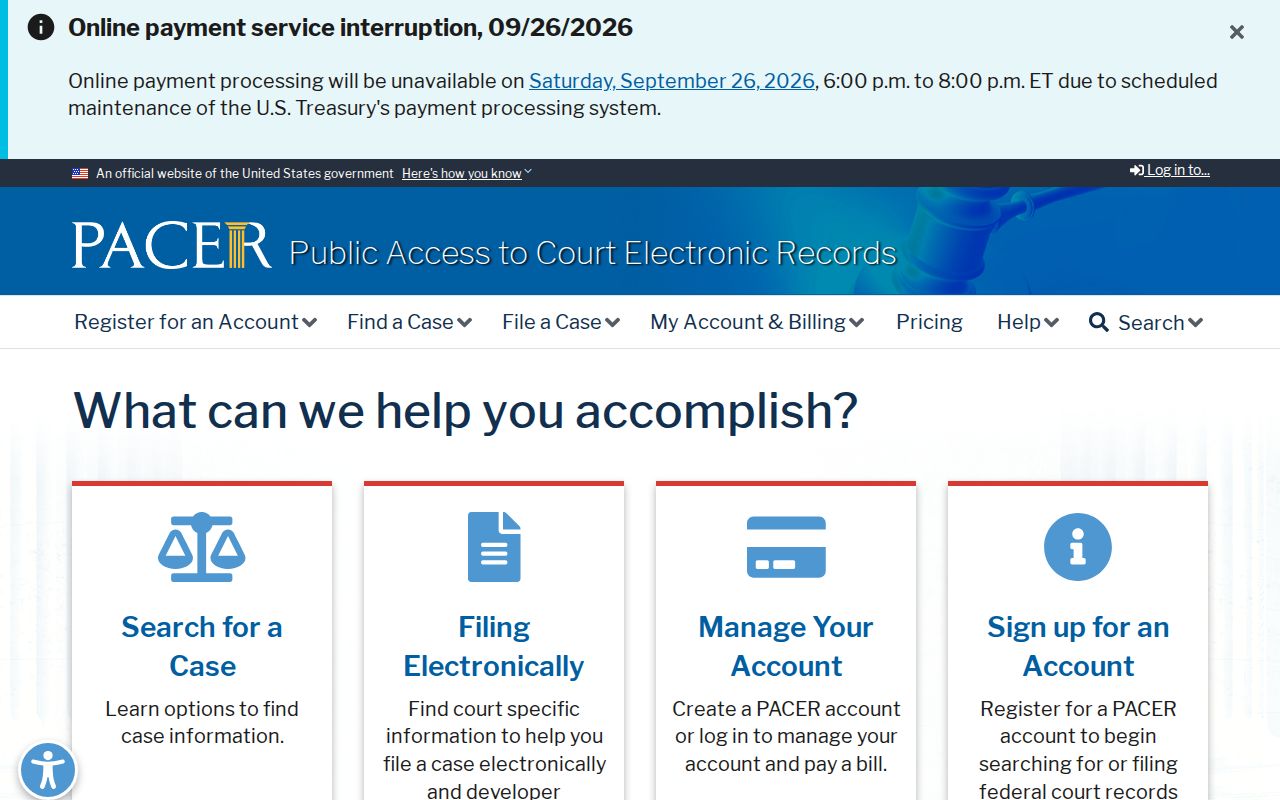
PACER's federal landing page offers no Louisiana person or case search. Federal access never shows every state or parish warrant.
Louisiana Fugitive Warrant Assistance Unit
The Louisiana Attorney General's Fugitive Apprehension Unit helps law-enforcement agencies when a fugitive's location falls outside the issuing agency's reach. It works across Louisiana city, parish, and state lines. The unit is an enforcement partner. Its published assistance line serves law-enforcement agencies only. For a personal Louisiana case, call the issuing court and the service agency instead. The Attorney General's Fugitive Apprehension Unit page describes its state-level role.
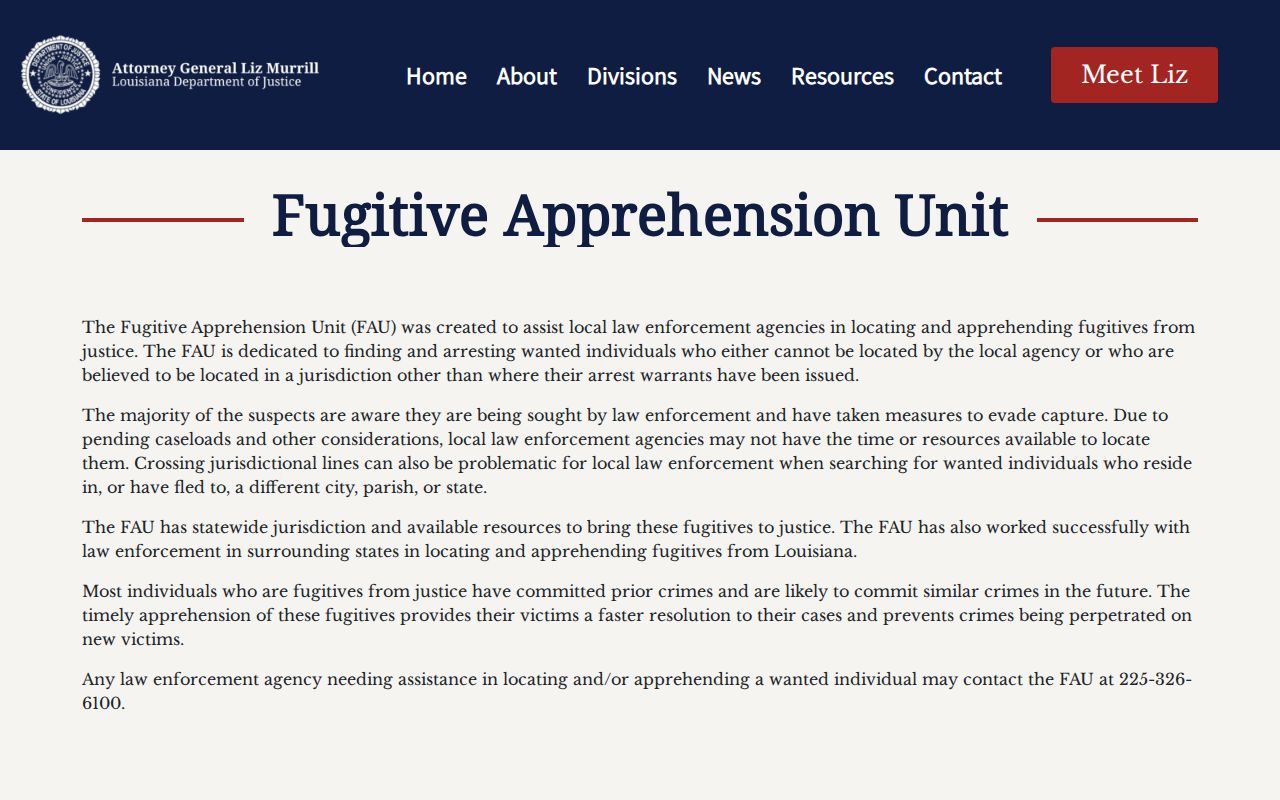
The Louisiana unit's page states its role beside a law-enforcement-only contact notice. That number is no public tip line.
Statewide System vs Parish Warrant List
A Louisiana parish sheriff's page covers its stated local scope. It is not a list of every court order. Some parish lists leave out fugitives wanted by other agencies, and city-court or constable matters may sit outside the sheriff's system. Louisiana has no public statewide list to reconcile those sources. The issuing court holds the authoritative case record, while the executing agency tracks service. Check both. That shows whether an order exists and whether it was served.
| Feature | Louisiana Statewide System | Louisiana Parish / Local Warrant List |
|---|---|---|
| Source | No public full-state warrant list located | Local publisher's own court or agency records |
| Coverage | Authorized LLETS / NCIC exchange only; scope is not publicly mapped | Only cases stated by that court or agency |
| Record of Record | Operational justice entry, if one is made | The issuing court's docket and order |
| Update Timing | No public freshness or synchronization promise | Varies; ask the court about current status |
Use Louisiana's parish directory to reach the local record-holder. A local list routes the question in Louisiana; the court confirms its order, and the assigned agency confirms service.
Louisiana Court Costs Do Not Check Warrants
The Louisiana Supreme Court's court-cost search identifies court and offense cost categories. It does not search warrants. It shows no case status. It will not say an order was recalled, and amounts depend on the Louisiana court and case. Ask before paying. The issuing court can state the total due and what action will resolve the case; the official statewide court-cost landing page provides the search interface.
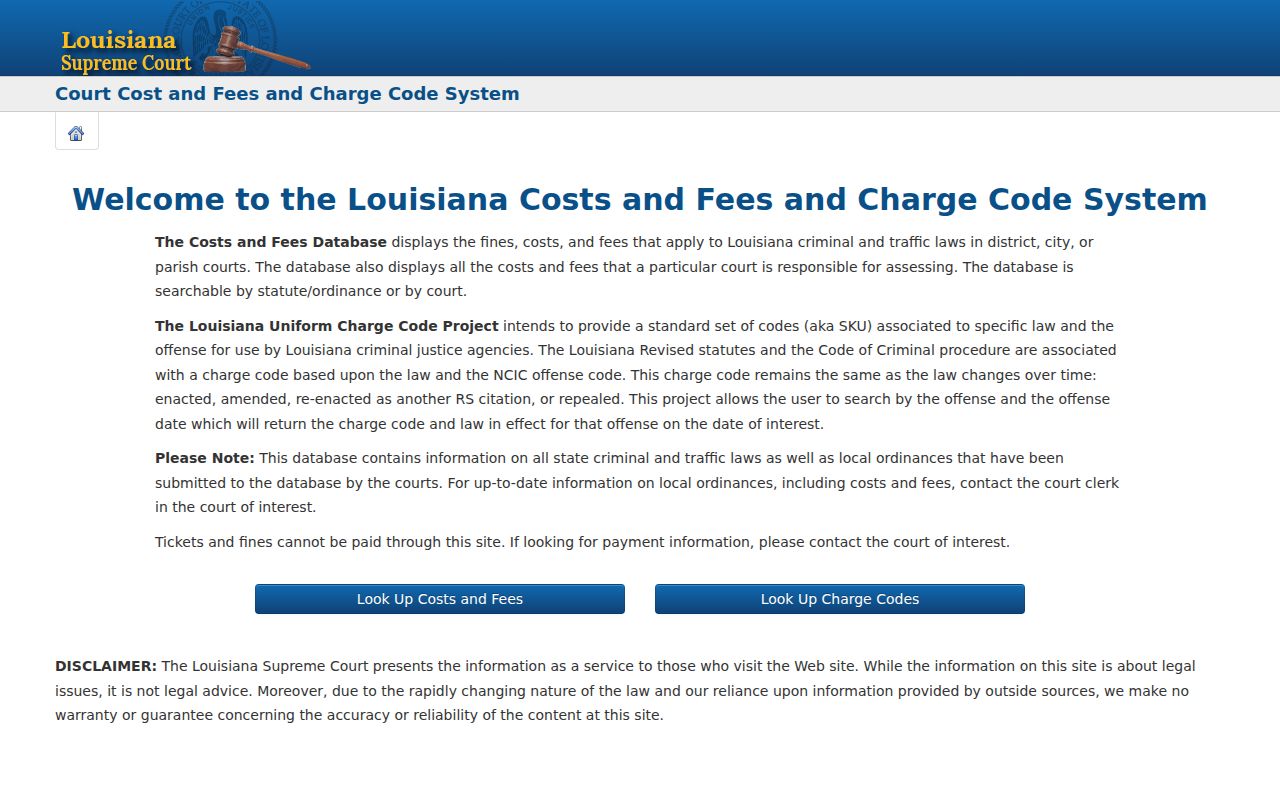
The Louisiana court-cost page shows only its search interface. It is no warrant lookup and no case amount.
Louisiana Warrant-System History and Technology
Louisiana posts no launch date for a public warrant database. Each system serves a different purpose. LACCH stores fingerprint-based arrest and disposition history. LLETS supports authorized exchange with NCIC. Neither is a Louisiana public active-warrant roster. Local warrant records stay with the issuing courts. The Louisiana judiciary's Integrated Criminal Justice Information System Policy Board has worked on shared standards since 1999. The Louisiana Supreme Court's 2025 annual report says a central broker server began secure, real-time exchange that year. That report does not show every local warrant is included, name the participating agencies or categories, or make data public. Justice of the Peace training and certification rules in Louisiana shape who may issue warrants, not database coverage. An exchange entry, a criminal-history record, and a court order remain separate records.
Note: ICJIS is a secure Louisiana data exchange, not a public warrant dataset anyone can search.
Louisiana's 2026 Warrant Recall Changes
Two Louisiana laws took effect August 1, 2026. Act 114, Article 202(H) lets a magistrate recall a warrant that magistrate issued, with immediate written notice to the district attorney and the executing agency. The law also amended Article 205. An arrest warrant remains active until executed or recalled. Notice clarifies the handoff. It does not promise every local screen or Louisiana list updates at once. Act 672 revised bail and failure-to-appear notice rules, including Article 333 address requirements. Those changes touch defendants and sureties. They create no public Louisiana portal. A warrant-amnesty or safe-surrender program is a limited event, and no Louisiana-wide program exists now, so for an old listing ask the clerk about recall and the agency about service. See the enrolled Act 114 text and Act 672 text for the enacted provisions.